
In many projects, the same thing happens every day: meetings are held, decisions are made, information is exchanged. And yet a large part of this knowledge is lost.
Not because nobody wants to document it. But because in day-to-day operations it simply doesn’t happen.
Meeting notes are written too late, never created at all, or end up somewhere in emails, chats, or local files. What is actually valuable project information becomes effectively unusable.
The solution would be straightforward: why not capture what was said directly, structure it automatically, and make it centrally available?
That is exactly what I implemented in this real-world example.
The idea is simple: a voice recording is automatically transcribed, analyzed, and stored as a structured entry in a project wiki. No manual follow-up work. No extra steps for the employee.
A fleeting conversation becomes a permanently available source of information.
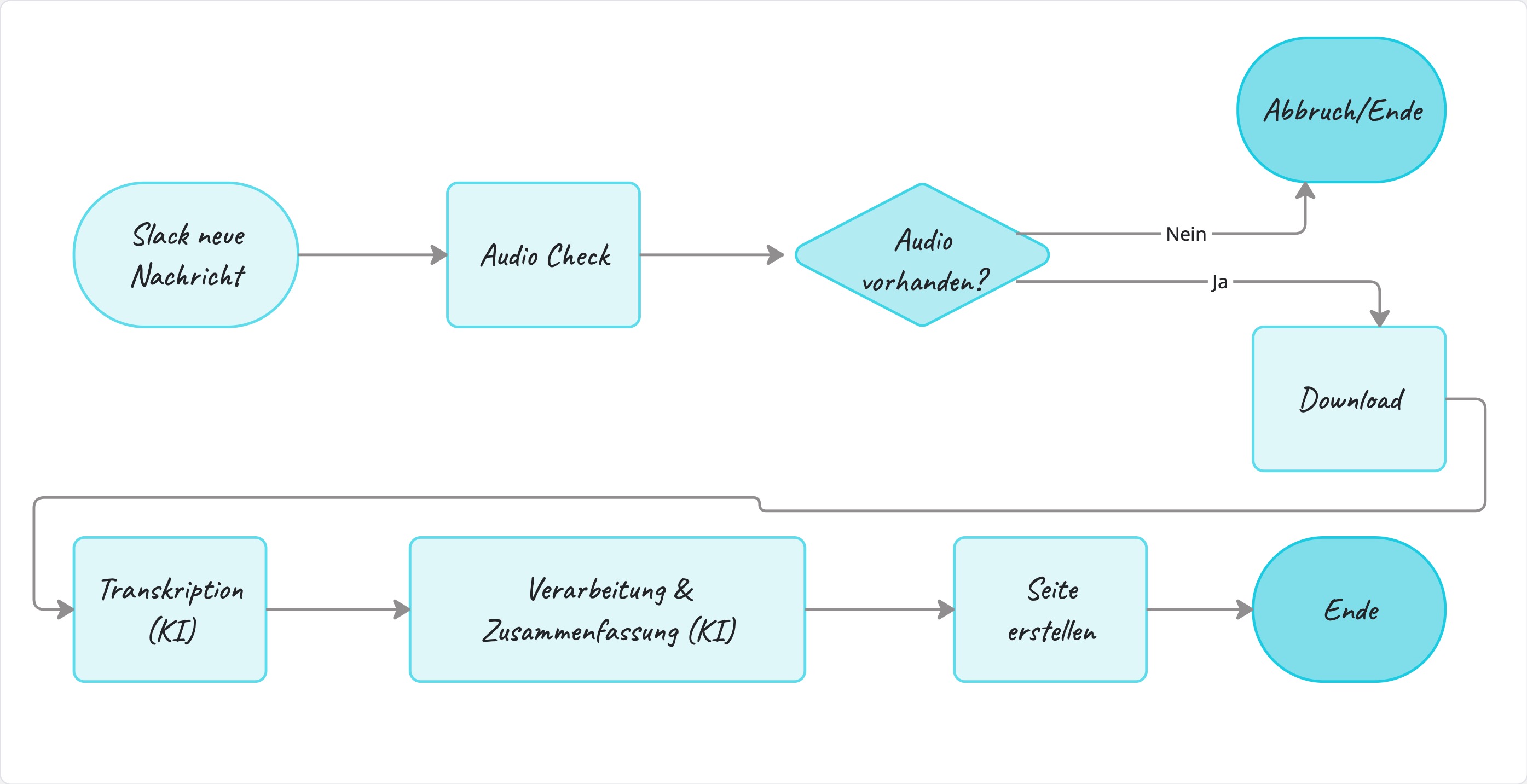
To implement this workflow, three core building blocks were combined:
The specific tools used were:
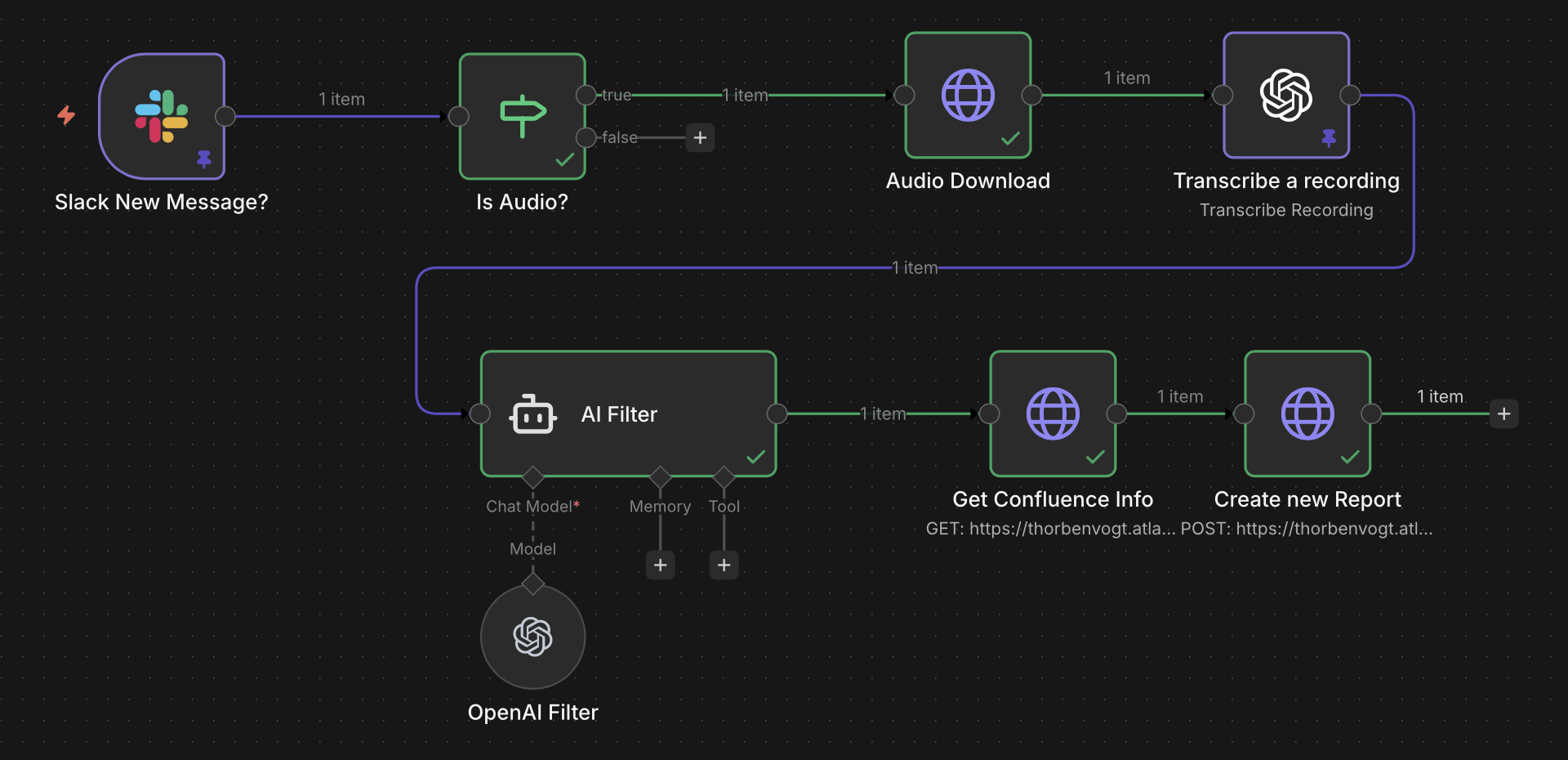
The process starts with something very simple: a voice recording is uploaded to a defined Slack channel. From that moment, everything runs automatically. The file is detected and processed by n8n.
In the next step, the audio file is converted into text by an AI model. This text is initially unstructured.
This is exactly where the decisive part comes in. An AI agent analyzes the content, filters out the relevant information, and brings it into a clear structure.
The following are generated automatically:
The result is formatted directly as HTML so it can be used in Confluence without any further adjustments.
In the final step, a new wiki page is automatically created via the Confluence REST API and populated with this content.
What was previously a spoken word is now structured, searchable, and permanently available information.
Technically, the solution is based on the Confluence Cloud REST API, which allows content to be created automatically. Authentication is handled via an API token linked to the user account. The actual page content is passed as HTML and stored directly in the wiki. The entire logic is mapped in n8n, where the individual steps of the workflow are connected: trigger, transcription, analysis, and handoff to Confluence. The AI agent plays a central role here.
A clearly defined prompt ensures that the content is output consistently, in a structured way, and without unnecessary information.
The actual problem in projects is rarely missing knowledge. It is missing structure and missing availability.
Information is there, but it is:
This is exactly where this approach comes in. It takes the documentation work off employees’ plates and at the same time ensures that information lands exactly where it is needed: in the central system.
The automation delivers several direct benefits:
At the same time, a system is created that scales and can be extended easily.
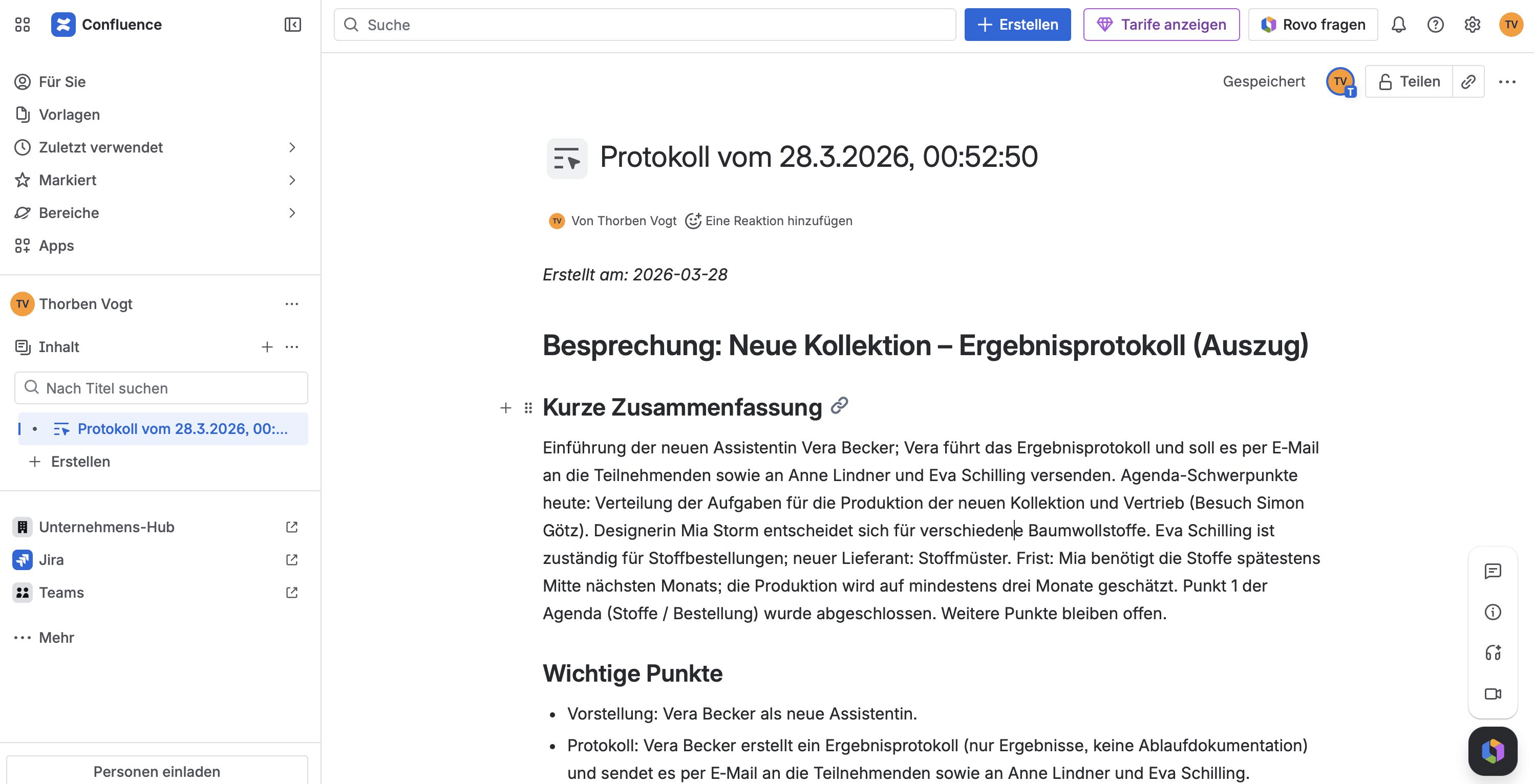
With a combination of automation and AI, even simple inputs like voice recordings can be turned into structured, valuable information.
The decisive factor is not the technology itself, but the way it is used.
When processes are designed so that information is captured and made available automatically, efficiency emerges almost on its own.
Knowledge is created every day within a company. The question is not whether it exists. The question is whether it can be used.
This example shows how a fleeting conversation becomes a permanently available source of knowledge.